No products in the cart.
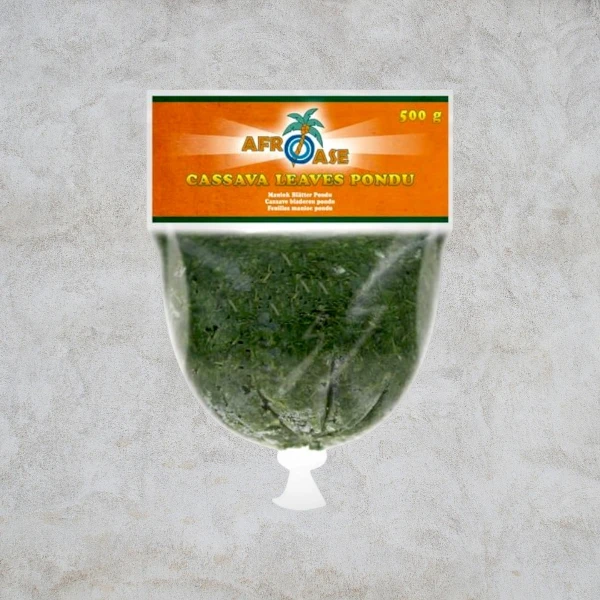
Cassava Leave (Pondu) – Afroase – 500g
Description
Cassava leaves are the tender, green leaves of the cassava plant (Manihot esculenta), a tropical shrub primarily grown for its starchy tubers. The leaves are an important ingredient in many African, Asian, and Latin American cuisines. They are often used for their rich, earthy flavor and dense nutrient profile when cooked. The leaves can be found fresh or frozen in many markets worldwide.
1. Characteristics:
- Taste:
- Flavor: Cassava leaves have a slightly bitter flavor, especially when raw. Cooking helps to mellow the bitterness and brings out an earthy, rich taste that pairs well with various meats, vegetables, and spices.
- Aromatic: While raw, cassava leaves don’t have a strong aroma, but when cooked, they release an earthy, green scent that is familiar in traditional African and tropical dishes.
- Nutritional Characteristics:
- High in Nutrients: Cassava leaves are rich in vitamins and minerals, including Vitamin A, Vitamin C, calcium, and iron. These nutrients support various bodily functions such as immune health, skin and vision, and bone and blood health.
- High Fiber: The leaves are an excellent source of dietary fiber, promoting digestive health and aiding in maintaining a healthy weight.
- Low Calorie: They are low in calories, making them a great addition to a balanced diet.
- Anti-inflammatory: Cassava leaves have anti-inflammatory properties, which can help reduce inflammation in the body.
- Culinary Characteristics:
- Mucilaginous Texture: Once cooked, cassava leaves become slightly mucilaginous (slimy), which is a characteristic shared with other tropical leafy greens such as jute leaves (molokhia).
- Cooking Time: They require prolonged cooking to become tender and to remove any toxic compounds (cyanogenic glycosides). This often takes 20-30 minutes of boiling or steaming.
- Versatility: They can be used in a variety of dishes, such as soups, stews, stir-fries, and even pounded into a paste. The leaves absorb the flavors of the ingredients they are cooked with, enhancing the dish.
- Toxins in Raw Leaves:
- Cyanogenic Glycosides: Raw cassava leaves contain naturally occurring toxins that can produce cyanide when not properly cooked. These toxins are neutralized through proper cooking methods, such as boiling for at least 20 minutes, making the leaves safe for consumption once prepared correctly.
- Storage Characteristics:
- Fresh Leaves: They are highly perishable and should be consumed within a few days of harvesting. Fresh cassava leaves should be stored in the refrigerator and can spoil quickly if not kept cool.
- Frozen Leaves: Frozen cassava leaves maintain their nutritional content and flavor for extended periods (12-24 months), making them more convenient for long-term storage.
- Cultural and Regional Importance:
- Cassava leaves are an integral part of many African, South American, and Southeast Asian cuisines. They are often used in traditional dishes like the Nigerian Ewedu soup, Congolese pondu, and Ghanaian abolo.
- They are known for their versatility in different cooking styles, especially in stews, soups, and porridges, where they contribute to a nutrient-dense, hearty meal.
Additional information
| Weight | 0.5 kg |
|---|
Related products